
Share This:
I can feel summer on the horizon, and we all know what that means: professional development books tossed into beach bags, read between trips to the playground and highlighted while waiting at trampoline parks and play dates.
Last year, I shared the science of reading books I planned to read over the summer. This year, though, I wanted to do something a little different. Instead of simply sharing my own reading list, I want to help you find the books that best match what you’re hoping to learn next.
Whether you want to strengthen your knowledge of vocabulary, assessment, small-group instruction, comprehension, or some other topic, I’m sharing the books I’d personally recommend in each area. Think of this as your summer professional development guide, organized by the topics teachers ask me about most often.
Simply click on any picture in this blog and it will take you to where you can purchase the book.
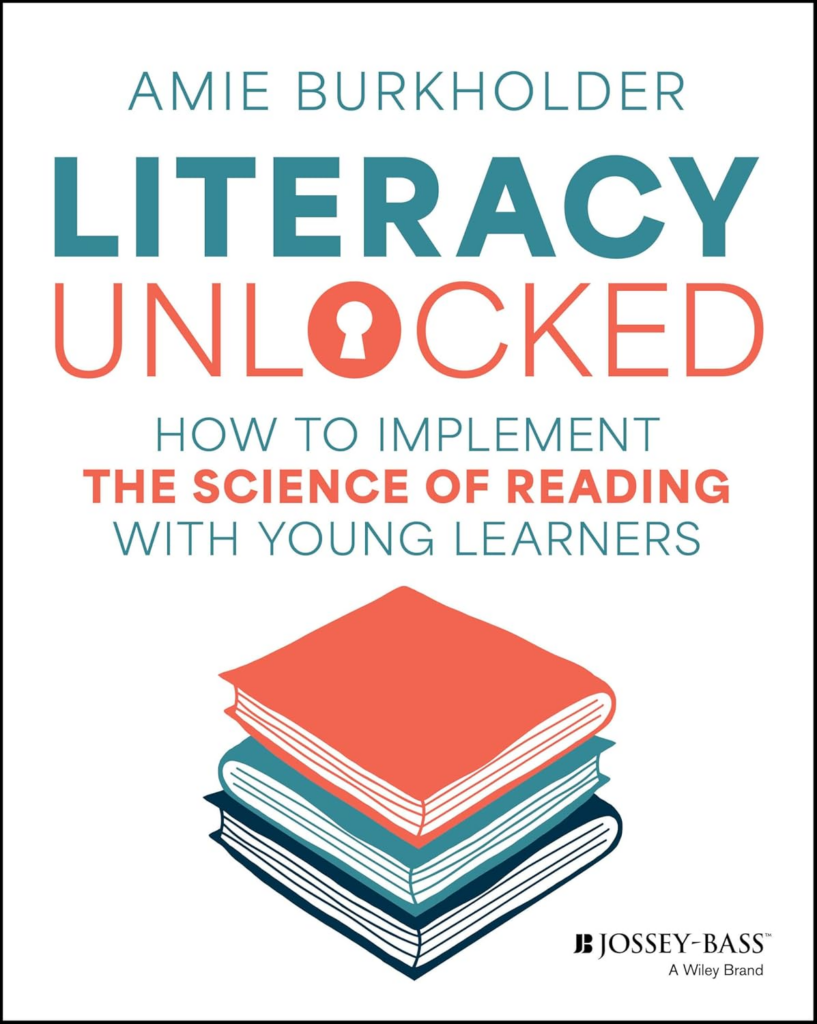
I’ve known Amie Burkholder for almost my entire science of reading journey. I’ve learned from her, presented alongside her, and watched her help countless teachers feel more confident in their literacy instruction. One of the things I admire most about Amie is the way she presents information. I’ve watched her present more times than I can count, and she has a gift for making teachers walk away thinking, “Okay, yes. I can actually do this.”
If you have a new teacher in your life, a teacher who is newer to the science of reading, or anyone teaching in the primary grades, Literacy Unlocked* is the book I would recommend handing them this summer. Amie walks teachers through foundational topics like phonemic awareness, handwriting (and trust me, she is brilliant at handwriting instruction), letter-sound knowledge, phonics, high-frequency words, application, background knowledge, and vocabulary in a way that feels approachable and actionable.
Simply put: this is a must-read summer book for K–2 teachers.
I’ve gone back and forth about whether I wanted to recommend The Reading Comprehension Blueprint or Know Better, Do Better: Comprehension. Honestly, I finally decided comprehension deserves a two-for-one special here.
Without question, The Reading Comprehension Blueprint is the most thorough book I’ve ever read on comprehension instruction. The only reason I almost didn’t recommend it is because it’s not an easy read. The truth is, comprehension is messy and incredibly complex, and I’ve yet to find anyone who explains it as thoroughly and thoughtfully as Nancy Hennessy does.
I’ll also be honest with you: Chapter 1 is dense. It took me three separate attempts to make it all the way through. But once you get past that foundation, the book opens into incredibly valuable chapters on topics like syntax, text structure, background knowledge, vocabulary, and the many strands that come together to support comprehension.
What I appreciate most is that the book doesn’t stop at theory. Nancy consistently connects the research to classroom application and instructional practices teachers can actually use. Is it the easiest professional development book you’ll ever read? No. Is it absolutely worth your time? Without a doubt.

Once you make your way through The Reading Comprehension Blueprint, you can continue your comprehension learning with Know Better, Do Better: Comprehension. I read David Liben and Meredith Liben’s original Know Better, Do Better years ago, and for a long time, it was one of my go-to recommendations for teachers wanting an approachable entry point into the science of reading. That original book is out of print now, but Know Better, Do Better: Comprehension carries the same clear voice and readability that made me love the first one so much.
The book is fewer than 200 pages, and it genuinely feels like your teacher bestie coaching you through comprehension instruction step by step. The Libens discuss topics like background knowledge, vocabulary, morphology, and what actually happens in the brain during comprehension.
I think my favorite section is Chapter 7, where they dive into close reading. One of the things I appreciate most is that they move beyond the oversimplified idea that close reading just means “reread the text over and over again.” Instead, they clearly explain what effective close reading instruction actually looks like, while also providing visuals and examples of the kinds of comprehension roadblocks teachers should learn to notice within texts.

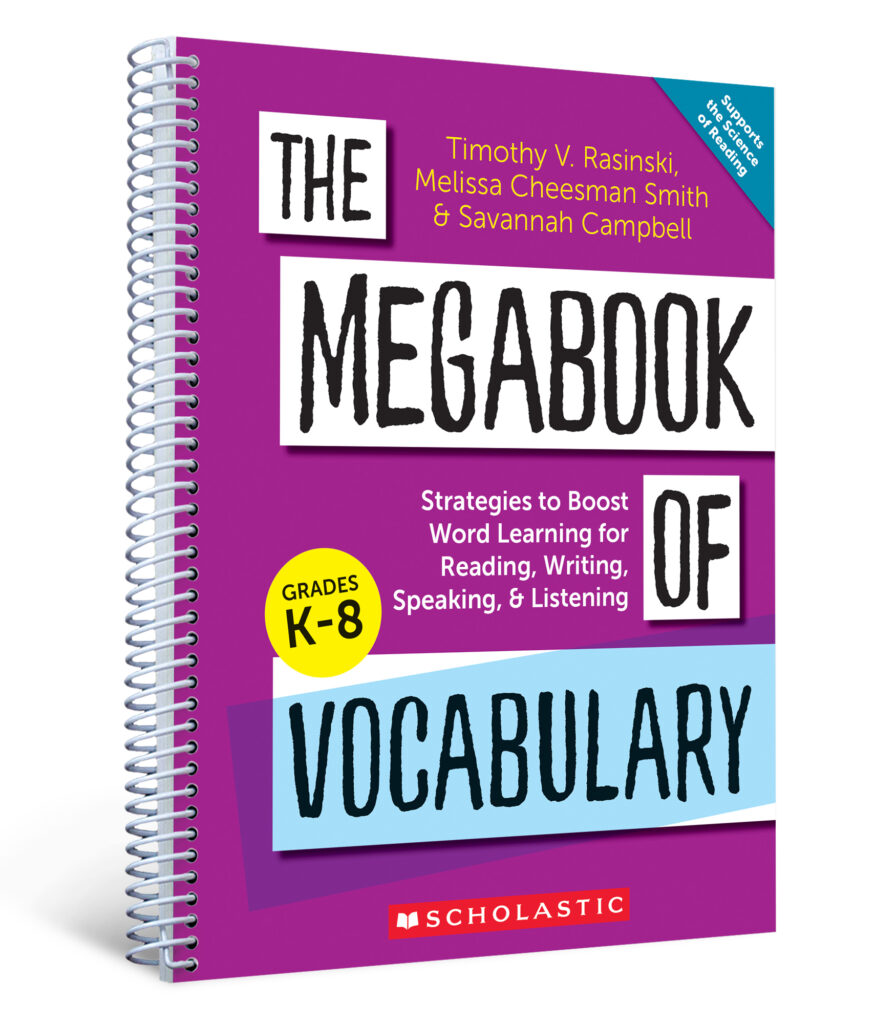
What kind of author would I be if I didn’t recommend my own book? If you’re looking for a vocabulary book this summer that is both research-based and immediately practical, this is the one I’d place in your hands.
When we wrote The Megabook of Vocabulary, we wanted to avoid two common problems with professional development books. We didn’t want it to be so heavy on theory that teachers were left wondering how to apply it in their classrooms. At the same time, we didn’t want to hand teachers a collection of disconnected activities without explaining the research behind them.
I think The Megabook of Vocabulary strikes that balance beautifully. We provide the research and foundational understandings teachers need in order to make thoughtful instructional decisions, but we also include more than 90 classroom-ready strategies that can be implemented right away.
Whether your goal is to build word consciousness, strengthen individual word learning, teach students tools for determining meaning, or explore word relationships, I hope you’ll spend a little bit of your summer learning alongside us.
Fluency is one of the “Five Pillars” of reading instruction as identified by the National Reading Panel, 26 years ago. Yet I think it’s still one of the least understood pillars. I think some of the confusion comes in thinking that all of the pillars hold equal weight. Yet fluency is so intertwined with how well a student can decode words. So what does that mean for our instruction?
Tim Rasinski and Melissa Cheesman Smith have been my go-to fluency gurus for a long time. There’s a reason why their book, The Megabook of Fluency, is in its 2nd edition and has over 500 reviews. It’s just that good. Much like The Megabook of Vocabulary, this book is part theory, mostly resources. It gives you just enough information about what fluency is and why it matters before giving you dozens of resources to improve Expression, Automatic Word Recognition, Rhythm and Phrasing, and Smoothness.
If you’ve got those readers that are moving into fluent reading, but still need help getting there, I can’t recommend this book enough!

Okay, okay, I know what you’re thinking: “Girl, you are not recommending that I spend my summer reading a book about assessments. I literally just finished giving my last one two seconds ago. I’m done.” And honestly? I get it.
But summer is actually a really great time for big-picture thinking. During the school year, we’re so busy grading papers, managing behavior, lesson planning, and surviving the daily chaos that it’s hard to step back and really think deeply about instruction and assessment systems. Summer gives us a little bit of breathing room.
I’m not saying you need to throw an assessment book into your beach bag next to your sunscreen and snacks, but if you’ve ever wanted to better understand assessment or how to make instructional decisions from the information you already collect, I have the perfect recommendation.
When I think of assessment, Stephanie Stollar is one of the first people to pop into my head. So when I saw she was releasing an assessment book, I knew I had to have it. Reading Assessment Done Right by Stephanie Stollar and Kate Winn is the most practical assessment book I’ve seen in a long time. They guide you through universal screeners, diagnostics, progress monitoring, and outcome assessments. Assessment doesn’t have to be scary, and I’m so grateful that heavy information like assessment is being talked about in ways that all stakeholders can understand.

If you aren’t grouping students according to guided reading levels anymore, then what are you supposed to do? As the science of reading continues making its way into every aspect of literacy instruction, one of the shifts I’m most excited about is the move toward more evidence-based small groups.
I still remember spending an entire summer trying to work my way through hundreds of dense pages about guided reading and “just right” books. Meanwhile, in fewer than 200 pages, Julia Lindsey manages to give classroom teachers exactly what they need to create meaningful, effective small groups in Small Groups, Big Results.
One of the things I appreciate most about this book is that the routines are actually realistic for classroom teachers. These are not 30-minute intervention lessons that somehow need to be squeezed into a 15-minute small-group block. Instead, Julia provides targeted routines that typically take between 5 and 15 minutes. Teachers use their assessment data to determine which area students need most, whether that’s alphabet knowledge and phonemic awareness, decoding, advanced decoding, fluency, or comprehension.
If you’re a classroom teacher looking to restructure your small groups in ways that are meaningful, evidence-based, and manageable within the reality of a school day, this is the book I would recommend reading this summer.

I remember one summer when I read 18 professional development books. At the time, it felt like if I could just find the right book, I might finally uncover the answer to why some of my students weren’t developing the way I knew they could. So I kept picking up book after book, searching for solutions.
That’s really why I wanted to organize this post the way I did today. The truth is, none of us can learn everything there is to know in a single summer. But when we identify the areas where we most want to grow, whether that’s assessment, small groups, vocabulary, comprehension, or something else entirely, the field suddenly becomes much narrower and more manageable.
My hope is that this list helps you spend a little less time wondering where to start and a little more time reading books that will genuinely support your growth as an educator.
Share This:

Savannah Campbell is a K-5 reading specialist. She has taught her entire 12-year teaching career at the school she went to as a child. She holds two master’s degrees in education from the College of William and Mary. Savannah is both Orton-Gillingham and LETRS trained. Her greatest hope in life is to allow all children to live the life they want by helping them to become literate individuals.
Savannah Campbell is a K-5 reading specialist. She has taught her entire 12-year teaching career at the school she went to as a child. She holds two master’s degrees in education from the College of William and Mary. Savannah is both Orton-Gillingham and LETRS trained. Her greatest hope in life is to allow all children to live the life they want by helping them to become literate individuals.
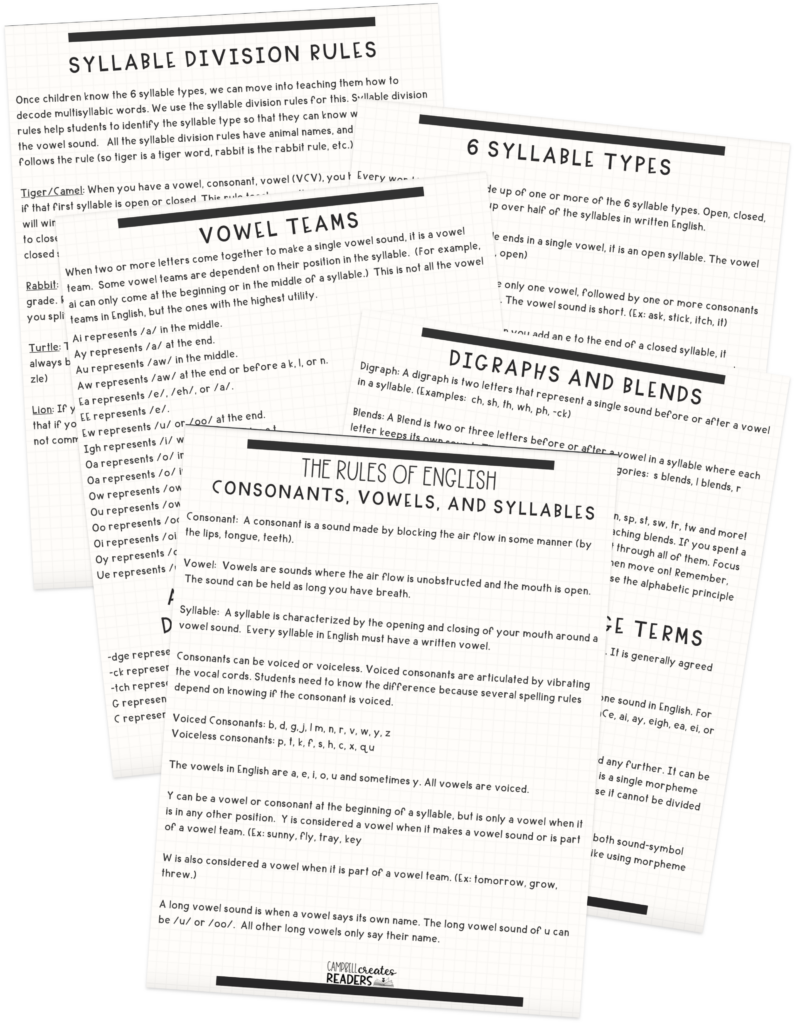
Feeling overwhelmed with all the terminology out there? Want to know the key terms all teachers need to teach phonics? In this FREE Rules of English cheat sheet, you get a 5 page pdf that takes you through the most important terms for understanding English—you’ll learn about digraphs, blends, syllable types, syllable divisions, and move. Grab today and take the stress out of your phonics prep!